
Toddler Discussion Guide
Building connection and language with your 1-3 year old, one everyday moment at a time
Ages 1-3 Years
Talking and Connecting With Toddlers
With toddlers, language is just emerging. Connection happens less through back-and-forth conversation and more through the everyday moments you already share: diaper changes, meals, walks, and play. Your warm, simple words give your child the building blocks for language and emotional security.
These guides help you turn ordinary routines into chances to build vocabulary, name feelings, and strengthen your bond with your 1-3 year old.
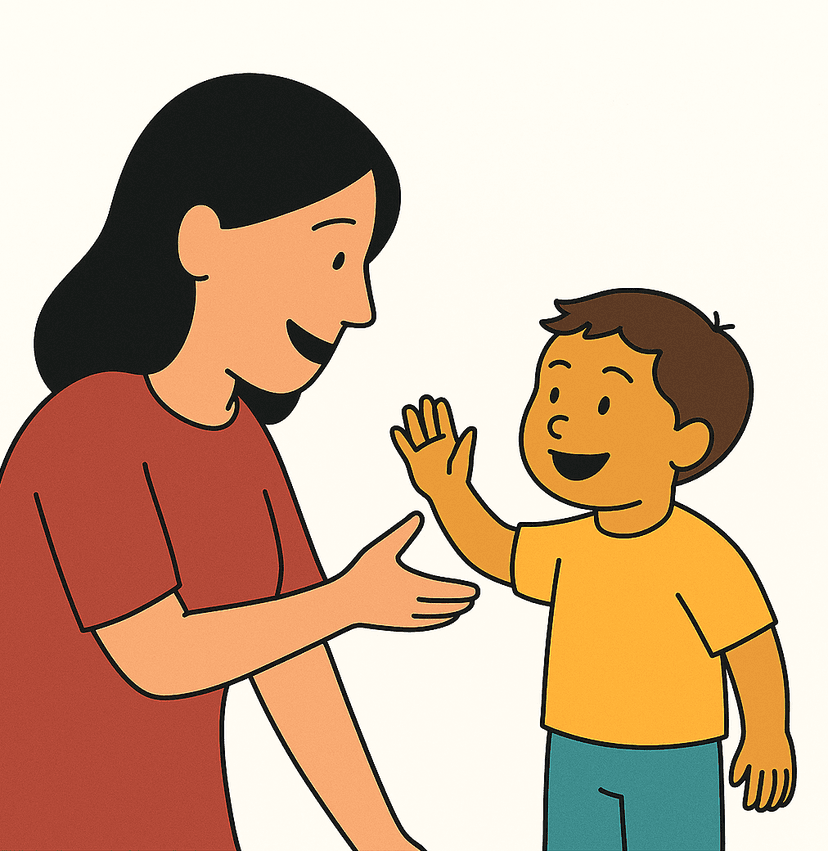
🗣️ Everyday Talk and Building Language
Narrate daily routines and name the world to grow your toddler's vocabulary
🧷 Narrating Daily Routines
Things to Say:
- • "Now we're changing your diaper. All clean!"
- • "Arms up. Let's put on your shirt."
- • "I'm pouring the milk. Glug, glug, glug."
- • "We're going up the stairs. One, two, three."
Why It Helps:
- • Connects words to actions your toddler can see
- • Makes everyday routines predictable and calm
- • Builds vocabulary without any special materials
- • Shows your child that talking is part of being together
🍎 Naming Objects and Actions
Things to Say:
- • "That's a dog. The dog says woof."
- • "You found a ball. A round, red ball."
- • "You're running. Run, run, run!"
- • "Here is your cup. Cup."
Simple Ways to Build On It:
- • Repeat the word a few times in a row
- • Add one word when they say one: "Ball." "Big ball!"
- • Point as you name so they follow your gaze
- • Use the real word alongside their baby word
🔁 Short Sentences and Repetition
Things to Say:
- • "Shoes on. Time to go."
- • "More banana? Here you go."
- • "Wash hands. Scrub, scrub, scrub."
- • "Bye-bye, ducky. See you later."
Keep In Mind:
- • Short, clear phrases are easier to understand
- • Hearing the same words daily builds memory
- • Songs and rhymes make repetition fun
- • Slow down and let your face show the meaning
⏸️ Pause for Serve and Return
How to Do It:
- • Say something, then wait and watch
- • Notice sounds, words, or gestures they offer back
- • Respond to their try: "You said 'up!' Up we go."
- • Take turns like a gentle conversation
Why It Matters:
- • Toddlers need time to find a sound or word
- • Responding to their cues builds back-and-forth skills
- • A pointing finger or a smile counts as a turn
- • It tells your child their attempts are worth answering
💡 Tips for Talking With Toddlers
Simple strategies to make everyday moments count
🎯 Meeting Them Where They Are
- • Get to their eye level: Sit or kneel so you are face to face
- • Keep language short and concrete: A few clear words at a time
- • Follow their lead: Let their interests guide the moment
- • Use lots of repetition: The same words and songs build memory
- • Be patient: Give them time to find a sound or word
👂 Tuning In
- • Watch and wait: Pause so they can take a turn
- • Answer their cues: Respond to sounds, words, and gestures
- • Name feelings: "You're feeling mad" or "You're so happy"
- • Add a word: When they say "dog," say "Big dog!"
- • Show interest: Use a warm face and gentle voice
🌱 Easing Power Struggles
- • Offer two simple choices: "Red cup or blue cup?"
- • Stay calm: Your calm helps them settle
- • Connect before correcting: Comfort first, then guide
- • Keep routines predictable: Knowing what's next feels safe
- • Use repetition and patience: Learning takes many tries