
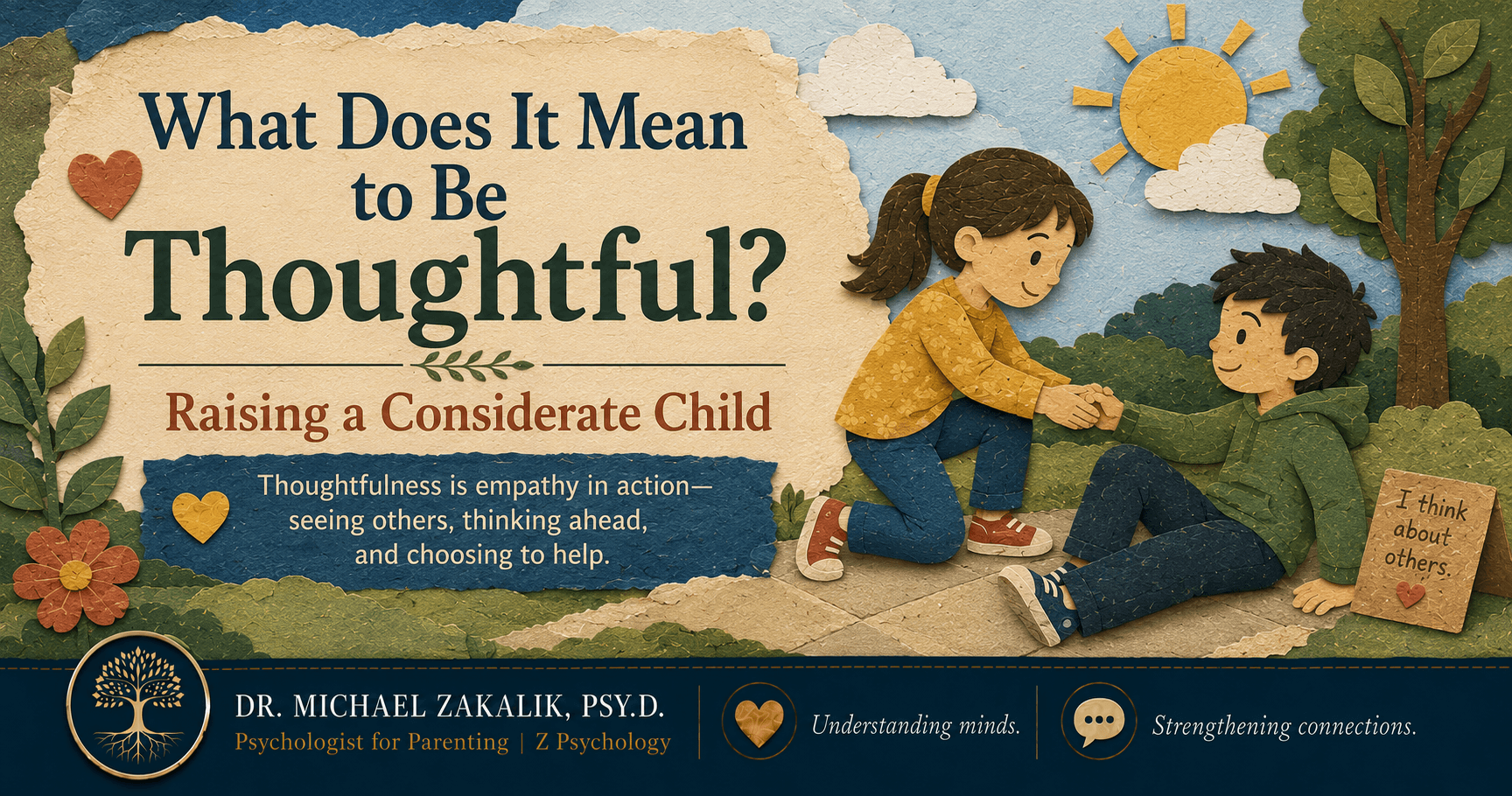
Thoughtfulness is empathy made useful, the bridge from feeling for someone to actually doing something about it.
(Disclaimer: The articles provided on this website are for informational and enhancing mental health awareness purposes only. They are not intended to be clinical interventions or provide medical advice. If you have any concerns about your well-being and/or well-being of others, please seek guidance from a qualified professional, such as a physician, psychologist, or counselor. If you are experiencing a clinical emergency please call 911 or 988 or go to the nearest emergency room. Here are some national and international helplines.)
By Dr. Michael Zakalik, Licensed Clinical Psychologist
Part of Dr. Z's Toolbox.
How to Raise a Thoughtful Child: A Parent's Guide
Thoughtful is one of those words we use as the highest compliment for a child and almost never define. We say what a thoughtful boy when he brings his grandmother her slippers, and think before you act when he does the opposite. Same word, two meanings, and children are quietly expected to figure out both.
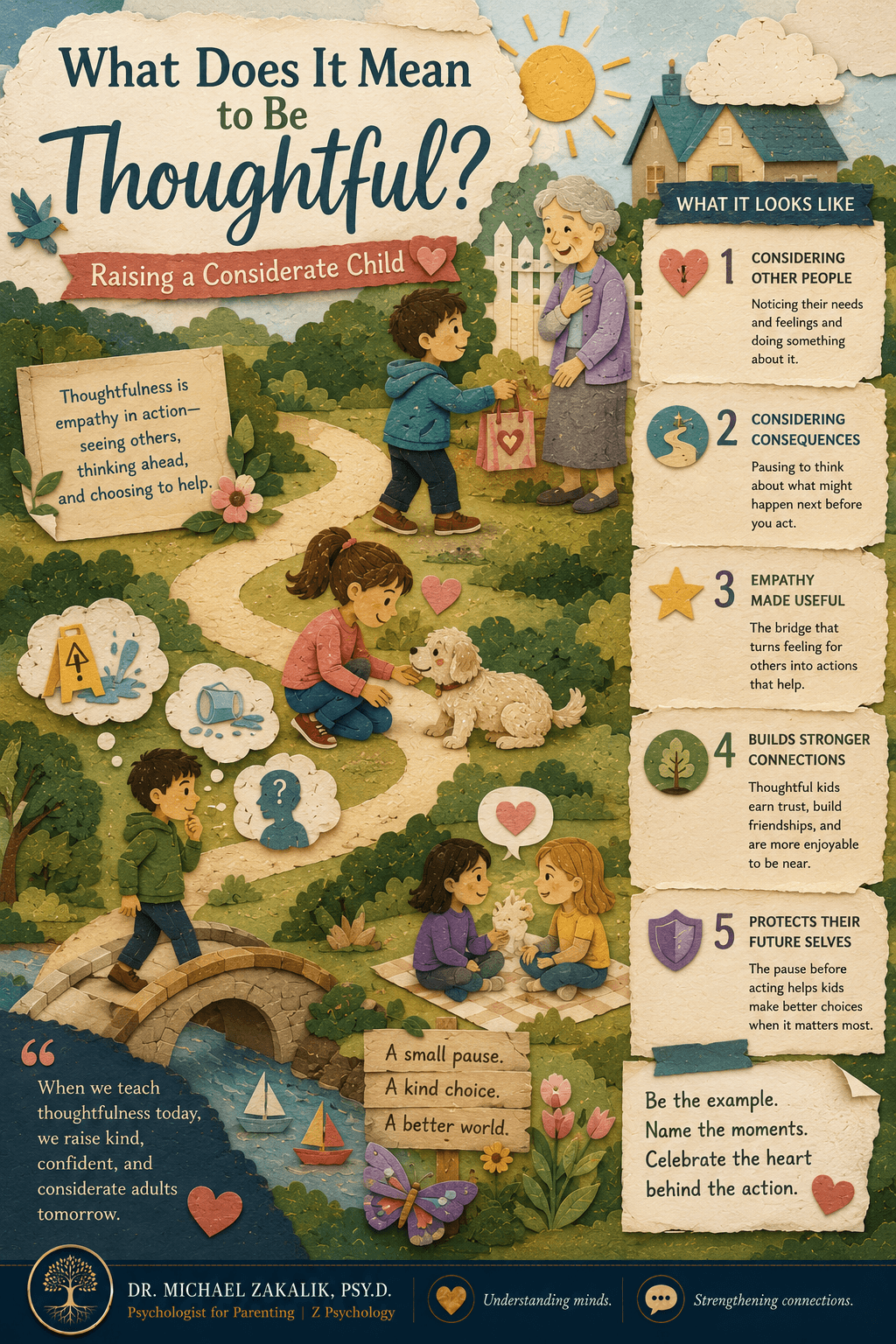
Thoughtfulness is really two skills wearing one coat. One is considering other people, caring about their experience and doing something about it. The other is considering consequences, pausing to think before you leap. Both can be taught, and both grow from the same root: the ability to step outside your own head for a moment.
What is thoughtfulness?
Being thoughtful means taking other people and likely outcomes into account before you act. A thoughtful child notices that grandma's hands are full and opens the door, and also notices that sprinting through the kitchen with a full cup of juice might end badly. It is empathy and forethought, working together.
Why it matters
Thoughtfulness is empathy made useful. Plenty of children feel for others but never act, because the bridge from feeling to doing was never built. That bridge is thoughtfulness, and it sits underneath kindness, generosity, and good judgment alike. It also tends to come back around. Children who learn to consider others are more enjoyable to be near, build stronger friendships, and grow into adults people trust. And the pause before acting, the forethought half, is one of the better protections against impulsive choices when the teen years arrive.
"Describe the deed, and the child repeats the deed."
How to explain it to your child
Being thoughtful means your brain takes a little extra moment to think about other people, or about what might happen next, before you do something. It is like having a tiny pause button that you press on purpose. The pause is where kindness and good choices come from. That pause is the whole concept, small enough for a young child to picture and use.
What it looks like in real life
You are carrying groceries and your daughter, unprompted, runs ahead to hold the door. That is the whole skill in miniature: she noticed your situation, imagined what would help, and acted. Most of us answer with a quick thanks. The more powerful response names the skill: that was so thoughtful, you saw my hands were full and you helped without even being asked. You are showing her what she did so she can do it again on purpose. Thoughtfulness grows fastest when you catch it and name it, much faster than when you lecture about it.
Try it together: activities by age
Build the skill in small, everyday moments. By age:
- Ages 3 to 5. Helper moments: give small, real jobs that help someone else, carrying a napkin to a sibling, watering a plant, since helping is thoughtfulness with training wheels still on. Wonder out loud: narrate other people's needs, grandpa looks tired, I wonder what would feel nice for him, so you teach their attention to land on others.
- Ages 6 to 8. The pause button: play a quick game where they stop and name one thing that might happen next before acting out a silly scenario, rehearsing the forethought half in a low stakes way. Secret kindness: plan a small surprise kindness for someone together, like a drawing left on a pillow, because doing kindness on purpose turns it into a skill rather than an accident.
- Ages 9 to 12. Take their view: when a conflict comes up, ask your child to describe how the other person probably saw it, since perspective taking is the engine of thoughtfulness and it strengthens every time it runs. Think it through: before a decision, walk through it together, what might happen, who it affects, what you might do differently, turning the inner pause into a habit they can run on their own.
A few things that quietly backfire
Demanding thoughtfulness (say thank you, be nice) produces compliance, not consideration. Doing all the noticing for them, pointing out every need so they never have to look, keeps their attention parked on themselves. And praising the child instead of the act (you are such a good boy) teaches less than naming the specific thing they did. Describe the deed, and the child repeats the deed.
Try this: the next time your child does something considerate, skip the generic "good job." Instead, describe exactly what they did and its effect, "you saw your brother was sad and you sat with him." Naming the deed is what teaches them to do it again.
Frequently asked questions
At what age can children actually be thoughtful?
Young children are naturally self focused, and that is developmentally normal rather than selfish. Glimmers of real consideration appear in the preschool years and grow steadily through childhood as perspective taking matures. Expecting consistent thoughtfulness too early only leads to frustration on both sides.
Is my child selfish, or just young?
Almost always just young. Self focus in early childhood is a feature of the developing brain, not a character flaw. Thoughtfulness is built gradually through modeling and practice, and the child who seems oblivious at four often becomes remarkably considerate by nine.
How do I teach thoughtfulness without nagging?
Catch it and name it. When your child does something considerate, describe exactly what they did and the effect it had. Specific praise for the act teaches far more than general reminders to be nice, because it shows the child the move clearly enough to repeat it.
Can you really teach a child to think before acting?
Yes, and it is one half of thoughtfulness. The pause before acting is a form of impulse control that grows with practice and age. Games that require stopping, plus calm conversations that replay impulsive moments afterward, both build it.
Free download: Thoughtfulness Family Discussion Guide
A kid friendly explainer of the pause button plus three activities you can try this week.
Download the guide (PDF)Enjoyed this? Explore more of Dr. Z's Toolbox