
(Disclaimer: The articles provided on this website are for informational and enhancing mental health awareness purposes only. They are not intended to be clinical interventions or provide medical advice. If you have any concerns about your well-being and/or well-being of others, please seek guidance from a qualified professional, such as a physician, psychologist, or counselor. If you are experiencing a clinical emergency please call 911 or 988 or go to the nearest emergency room. Here are some national and international helplines.)
By Dr. Michael Zakalik, Licensed Clinical Psychologist
Why Does My Toddler Hit? What It Means and How to Respond
When your toddler hauls off and hits, it can be shocking, embarrassing, and worrying all at once. But hitting is not a sign that something is wrong with your child, and it is not a sign that you are failing. Hitting is communication. It is your toddler saying, with their body, that they have a feeling too big and their brakes are not built yet. The most powerful thing you can do is not to punish the hit. It is to lower the storm and lend your child your calm through your relationship, until they are settled enough to actually learn.
Why toddlers hit (it is communication, not defiance)
The thinking part of the brain that puts the brakes on impulses is barely under construction in a toddler. When a feeling floods in faster than they can manage it, it comes out through the body. Hitting is what big feelings look like before a child has the words and the impulse control to do anything else. It is developmentally normal, and it is information.
What the hitting is telling you
Underneath a hit there is almost always a need or a feeling: overwhelm or overstimulation, frustration, being tired or hungry, a feeling too big for words, or sometimes a clumsy bid for connection or a test of where the edges are. When you ask what is my child telling me, instead of how do I make this stop, you begin responding to the cause rather than the symptom.
What to do in the moment
- Reduce the stimulation. Turn down the noise, the lights, the audience, and your own words. A flooded brain cannot take anything in, so first you shrink the storm.
- Keep everyone safe, calmly. Gently block or step between. A simple, steady "I won't let you hit. I am keeping everyone safe" sets the limit through your calm presence, not through anger.
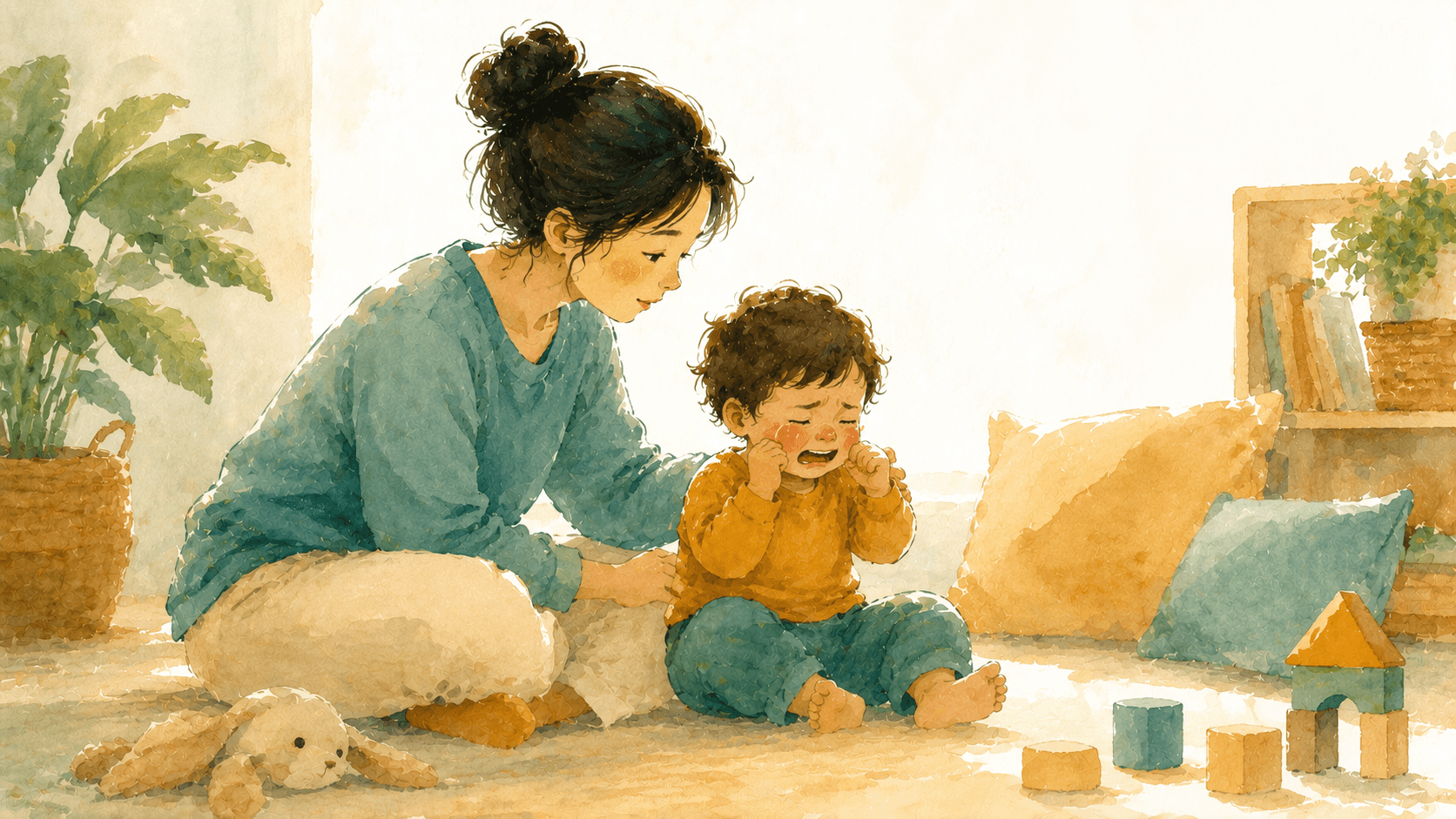
- Lend your calm. Your regulated body is the most powerful tool you have. Offer simple empathy, "You are so mad," and stay close. You are not fixing yet, you are sharing your steadiness until theirs returns.
- Wait until your child can think again. Only when a child is psychologically available, calmer and able to reflect, can they actually learn anything. Teaching in the middle of the flood does not land.
- Reconnect, then guide briefly. Once your child is settled, name what happened and a better next step. The lesson sticks because it travels through your relationship, not a punishment.
"Hitting is not your child being bad. It is your child being overwhelmed, and borrowing your calm is how they find their way back."
A word about safety
There is a limit for every parent, and safety comes first. If your child's aggression escalates to the point where you cannot keep them, yourself, or other children safe, it is okay to call 911 or go to your nearest emergency room to help everyone stabilize. That is not a failure. It is responsible parenting that protects everyone, including your child. If aggression is frequent or intense, some families learn a therapeutic hold, a safe and contained way to help a child who cannot stop on their own. This should only ever be done with proper professional training, so talk with a psychologist about whether it fits your situation and how to learn it safely.
Helping hitting fade over time
Hitting fades as the brain matures and as your child builds other tools, and you can help it along. Protect sleep and food, since a depleted child has the shortest fuse. Lower the daily overwhelm where you can. Build feelings words in calm moments so they are available in hot ones, using a tool like the feelings thermometer. And keep investing in the relationship, because a child who feels deeply connected has the strongest foundation for learning to regulate.
The relationship is doing the teaching
Every single time you stay steady and connected while your child is at their very worst, they learn something profound, that the relationship can hold them even then. Repeated over months, that lived experience of a bond that does not break is what eventually replaces the hitting. You are not just managing a behavior. You are teaching your child, through your relationship, that big feelings are survivable.
When to seek extra support
Most toddler hitting eases with time, calm, and connection. But if the aggression is intense, frequent, lasts well beyond the toddler years, or is leaving you worried or worn down, it is worth talking with a psychologist. Reaching for support is a smart, strong move, not a last resort. If big feelings and meltdowns are also part of the picture, our guide on how to stop toddler tantrums is a helpful companion to this one.
Frequently asked questions
Is hitting normal for toddlers?
Yes. It is a very common stage, driven by big feelings and a brain that has not built impulse control yet. It typically eases as language and self-regulation grow.
Should I make my child say sorry?
A forced apology teaches compliance, not empathy. It is more powerful to reconnect first, then help them make it right once they are calm and actually mean it.
Should I hit back so they know how it feels?
No. Hitting back teaches that hitting is what big people do when they are upset, which is the opposite of the lesson. Your calm is the teacher.
Why does my child hit me and not others?
Because you are their safe person. Children often save their biggest feelings for the relationship that feels safest to fall apart in. It is a sign of trust.
Enjoyed this? Explore more articles