
(Disclaimer: The articles provided on this website are for informational and enhancing mental health awareness purposes only. They are not intended to be clinical interventions or provide medical advice. If you have any concerns about your well-being and/or well-being of others, please seek guidance from a qualified professional, such as a physician, psychologist, or counselor. If you are experiencing a clinical emergency please call 911 or 988 or go to the nearest emergency room. Here are some national and international helplines.)
By Dr. Michael Zakalik, Licensed Clinical Psychologist
Why Won't My Child Listen? A Psychologist's Guide
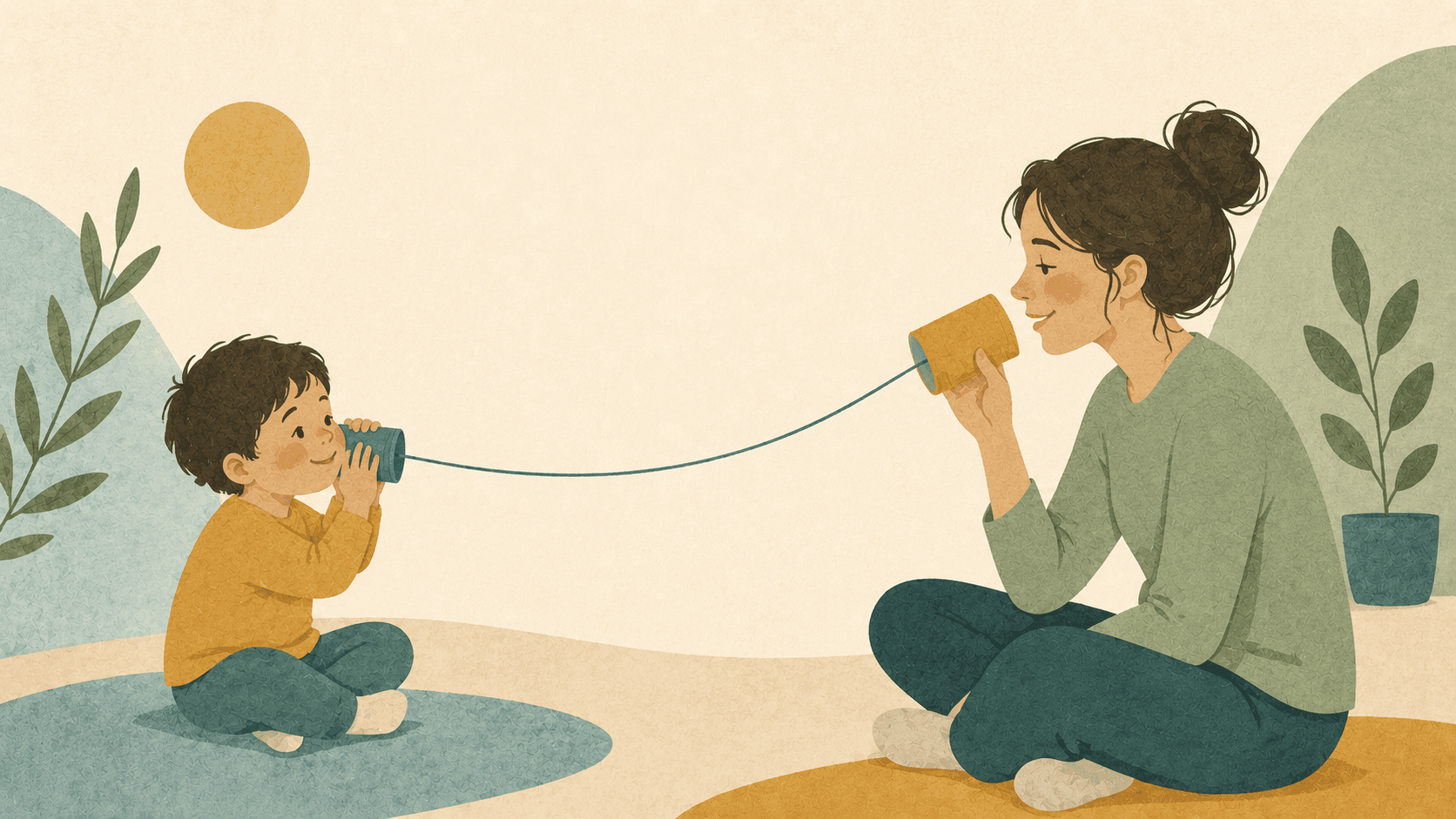
If you feel like you are repeating yourself ten times a day, you are not alone, and your child is probably not ignoring you on purpose. Most of the time, not listening is not defiance. It is communication. It might mean your child is too young to do what you are asking, too absorbed to switch gears, too flooded to hear you, or too disconnected in that moment to want to cooperate. Children listen best to the people they feel most connected to. So the fastest route to cooperation is not a louder voice or a tenth reminder. It is connection first, then a clear, kind request.
Why kids do not listen (it is rarely defiance)
There is almost always a reason underneath. Your child may be developmentally not ready to follow multi-step directions. They may be so absorbed in play that switching gears is genuinely hard. They may be flooded, and a flooded brain cannot process words. They may feel disconnected in that moment, and cooperation flows from connection. Or the request itself may be the problem: too vague, too many at once, or called across the room. When you ask what is getting in the way, you stop repeating and start solving.
Listening grows from connection, not volume
Children cooperate most with the people they feel closest to. That is why nagging and yelling backfire over time: they chip away at the very connection that makes a child want to listen. A warm relationship is not a reward you give after good listening. It is the soil that good listening grows in.
How to get your child to actually listen
- Connect before you direct. Get close, get down to their level, a hand on the shoulder, a moment of eye contact. A connected child is a listening child.
- Make one clear, doable request. One step, stated simply and positively: "Shoes on, please," not a stream of reminders.
- Get their attention first. Say their name, pause, and make sure they are actually with you before you give the instruction.
- Give warnings and transitions. "Two more minutes, then we go." Abrupt switches are hard for a developing brain.
- Share your calm. A request delivered calmly lands. One delivered in frustration trips their alarm and shuts listening down.
- Follow through kindly. If it does not happen, move closer and help, rather than repeating it louder from across the room.
"Children listen best to the people they feel most connected to. Connection is not a reward for listening, it is the reason for it."
What to do when you have said it ten times
If you find yourself on the tenth reminder, stop repeating. Repeating teaches your child that you do not really mean it until your voice rises, which trains them to wait for the yell. Instead, go to them, reconnect, and help them start the task. It feels slower, but it is far faster than another round of reminders. If raising your voice has become the default, our guide on how to discipline without yelling can help you set limits while staying calm.
When not listening is something more
Sometimes not listening points to something worth checking. If your child truly cannot follow directions, often seems not to hear you, or struggles far beyond same-age peers, it is worth ruling out hearing, attention, or processing differences with a professional.
The relationship is doing the teaching
Cooperation is a byproduct of a strong, warm relationship, not something you can force. Every calm, connected interaction makes the next request a little easier. You are not training obedience. You are building a relationship in which your child genuinely wants to follow your lead. When big feelings get in the way of listening, the Feelings Thermometer activity can help your child name what is happening before they can cooperate.
Frequently asked questions
Why does my child ignore me?
Often they are absorbed, overwhelmed, or have not actually registered the request. Get close and get their attention before you give an instruction.
Should I count to three?
A countdown can work as a calm transition cue. But if it becomes a threat-and-punish ritual, it loses its power. Connection works better than pressure.
Why does my child listen to others but not me?
Because you are their safe person, so they relax their guard with you. It is frustrating, but it is also a sign of how secure they feel with you.
Is it a discipline problem or a hearing problem?
If not listening is constant and happens across all settings, it is worth ruling out hearing and attention issues with a professional.
Enjoyed this? Explore more articles