
"I need to tell you something, and you are going to be mad"
This is the script for any hard disclosure, and the heart of it is your first sentence.
Dr. Michael Zakalik, Psy.D., Licensed Clinical Psychologist
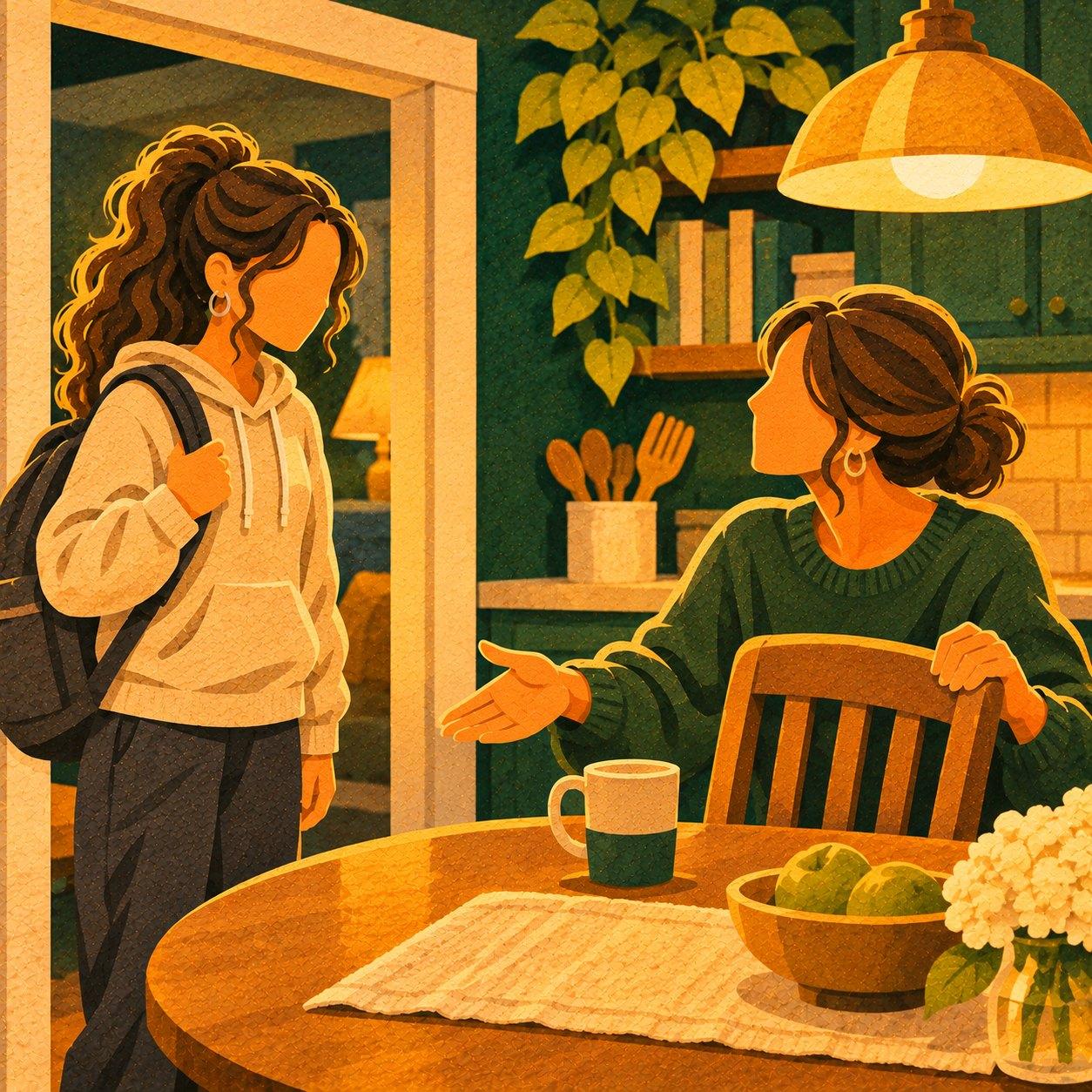
For your teen: what to do
- Pick a moment when your parent can listen. You can ask: "Can I talk to you about something hard?"
- If saying it out loud is too much, write it in a text or a note. That counts.
- Start with the hardest sentence. It gets easier after that.
- Say what you need: "I need help," or "I just need you to listen first."
- If your parent asks for a minute, let them have it. It means they are trying to get this right.
What your teen is feeling
Dread. They have probably rehearsed this many times and imagined the worst version of your face. The fact that they are telling you at all means they still believe you can help.
What you are feeling
Your stomach drops before you know what it is. Your mind may race to the worst possibilities. You are allowed to be scared, and you can still choose your first sentence.
The script
In the moment
Say
- "I am glad you are telling me. I am listening."
- "Whatever it is, we will figure it out together."
- Say, if you need it: "I need a minute to take this in so I can respond well. I am not going anywhere. I will be back in ten minutes."
Try not to say
- "What did you do now?" or "I knew something was going on."
When you see them** (after your minute, or if they told you by text)
Say
- "Thank you for waiting. I love you. Tell me more."
Try not to say
- "Do you have any idea what you have put me through?"
That night or the next day
Say
- "I have been thinking about what you told me. I am still glad you did."
- "There will be things to work out. We will do that together, one step at a time."
The agreement to make ahead of time
"You can tell me anything. I may need a minute to calm down, and I promise to listen all the way through before I react."
If you would like more support
You do not have to work through parenting questions alone. Your pediatrician or your child's school can be good first conversations.
If you or your child are in crisis, call or text 988 in the United States, or call your local emergency number.