
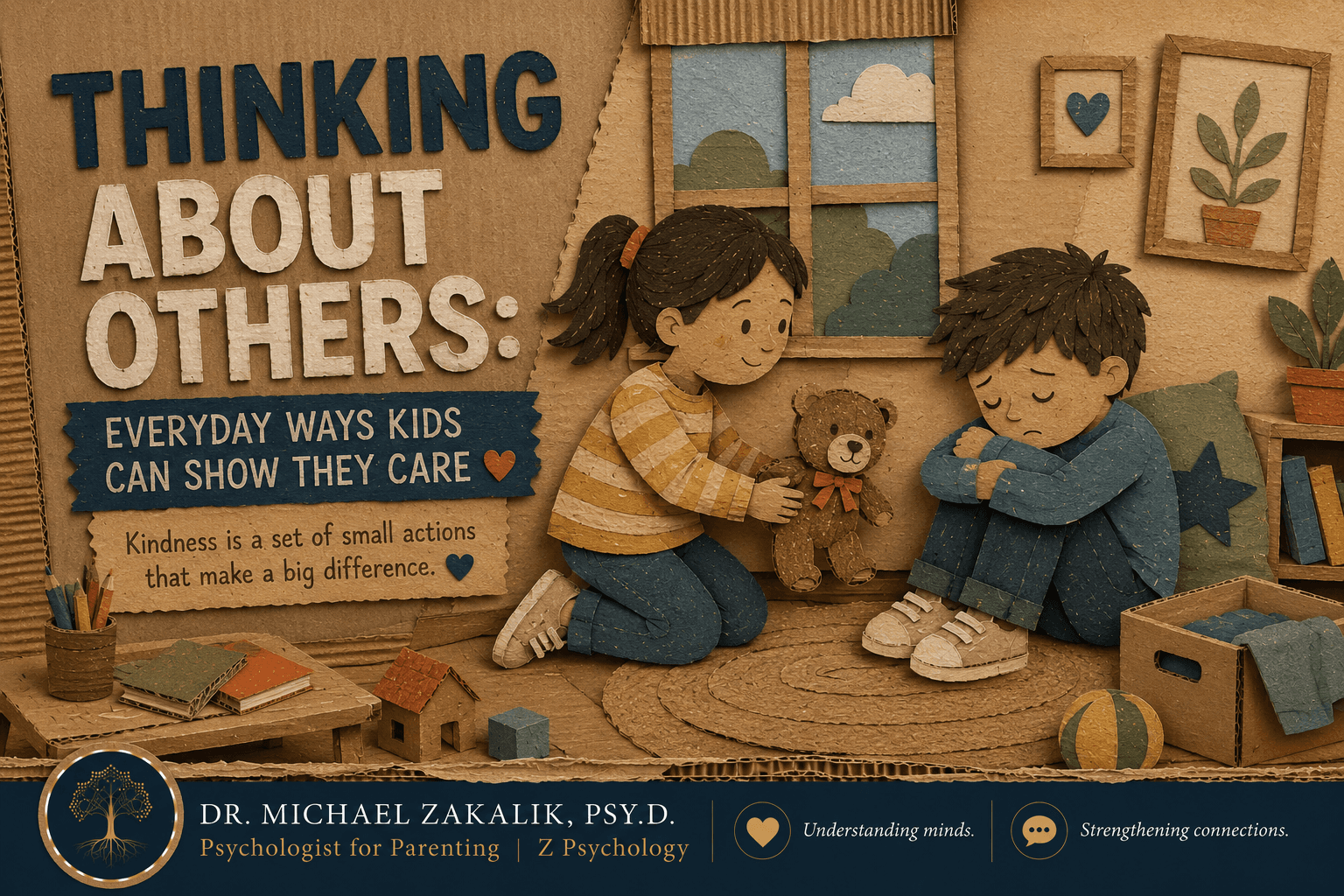
Kindness is not a grand gesture. It is a steady habit of noticing others and doing small things about it.
(Disclaimer: The articles provided on this website are for informational and enhancing mental health awareness purposes only. They are not intended to be clinical interventions or provide medical advice. If you have any concerns about your well-being and/or well-being of others, please seek guidance from a qualified professional, such as a physician, psychologist, or counselor. If you are experiencing a clinical emergency please call 911 or 988 or go to the nearest emergency room. Here are some national and international helplines.)
By Dr. Michael Zakalik, Licensed Clinical Psychologist
Part of Dr. Z's Toolbox.
Teaching Kids Kindness: Everyday Ways to Show They Care
Kindness gets talked about a lot and taught surprisingly little. We tell kids to be kind the way we tell them to be careful, as if the instruction itself were enough. But kindness is not a mood a child summons on command. It is a set of small, concrete actions, and like any actions, they get easier and more automatic with practice.
This is thoughtfulness made visible: the everyday ways a child can show another person they matter. The aim is not occasional grand gestures but a steady habit of noticing others and doing small things about it.
What does showing you care look like?
Showing you care is the everyday expression of kindness: noticing what someone needs and doing a small thing about it. For kids it looks like sharing, helping, comforting a sad friend, including someone, or simply saying something nice and meaning it. It is empathy turned into action, in kid-sized pieces.
Why it matters
Kindness practiced becomes kindness habitual. Children who regularly do small caring acts build genuine concern for others, stronger friendships, and a sense of themselves as someone who helps. There is also a well-known boomerang effect: doing kind things tends to make the doer happier too. You are not only raising a kind child, you are handing them a reliable source of their own wellbeing.
How to explain it to your child
Caring about someone is a feeling, but showing you care is something you do. You can show people they matter with tiny things: sharing a toy, saving someone a seat, asking if a sad friend is okay. You do not need to do something huge. Small kind things, done often, are what make people feel loved.
What it looks like in real life
Your daughter notices her brother is sad and, without prompting, brings him his favorite stuffed animal. The ordinary response is a passing "that's nice." The response that grows the habit names it: "That was so kind. You noticed he was sad and you did something to help him feel better." Naming the specific act, rather than just calling her a good girl, shows her exactly what to do again.
"Name the specific act, not just the child. You noticed he was sad and you did something shows her exactly what to do again."
Try it together: activities by age
Build the habit in small, everyday moments. By age:
- Ages 3 to 5. Little helper jobs: give small ways to help others daily, like handing out napkins or feeding the pet, since helping is kindness with the training wheels still on. Notice kindness: point out kind acts as you see them, in life and in books, because what gets noticed gets repeated.
- Ages 6 to 8. One kind thing a day: make a gentle habit of doing or noticing one kind act each day, and chat about it at dinner, since habits form through small daily repetition. Secret kindness: do a small anonymous kindness for someone together, which teaches that the act itself is the point.
- Ages 9 to 12. Spot the need: coach them to look for what someone might need before being asked, then act on it, because anticipating a need is kindness at its most thoughtful. Kindness that costs something: talk about kind acts that take a little effort or giving something up, since older kids are ready to learn that the best kindness sometimes costs a bit.
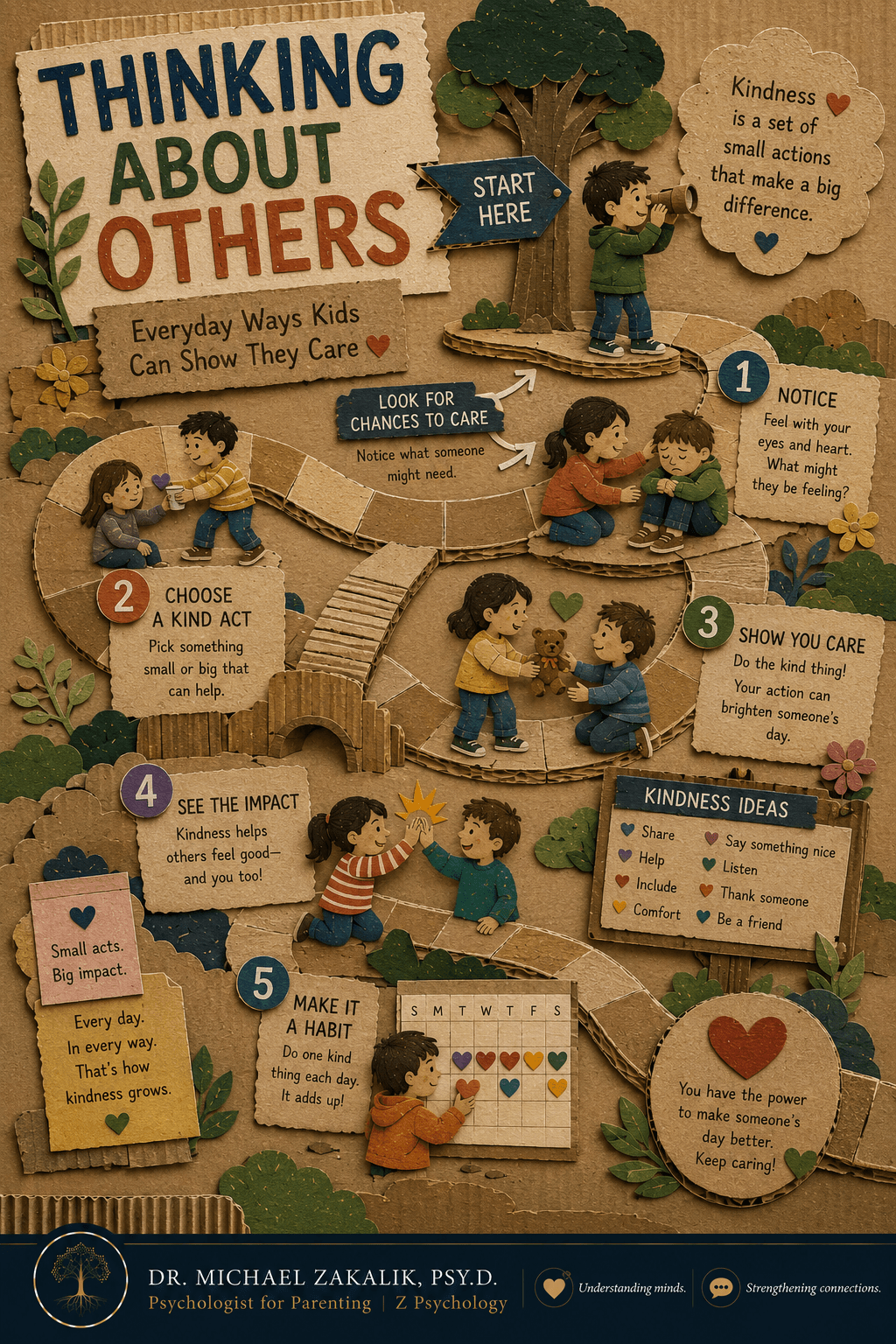
Try this: tonight at dinner, have everyone share one kind thing they did or noticed today, grown-ups included. Two minutes. You are teaching your child that caring for others has a place at the table, every day.
Frequently asked questions
How do I teach my child to be kind?
Model kindness yourself, give your child small daily chances to help others, and name their kind acts specifically when they happen. Kindness is learned through repeated practice and through watching the adults around them, far more than through being told to be nice.
My child only seems to think about themselves. Is that normal?
Yes, especially in the younger years. A degree of self-focus is developmentally normal and not a sign of a selfish child. Genuine concern for others grows steadily with age, modeling, and practice, so the self-focused four-year-old often becomes a remarkably caring older child.
Should I reward my child for being kind?
Praise the specific act warmly, but be cautious with material rewards, which can shift the focus from caring to earning a prize. The goal is for kindness to feel good in itself. Naming and appreciating the act usually does more than a sticker.
Free download: Showing They Care Family Discussion Guide
Simple, age-by-age ways to make kindness a daily habit your child can practice at home.
Download the guide (PDF)Enjoyed this? Explore more of Dr. Z's Toolbox