
A Flat Tire or Breakdown
The car has stopped working, your teen is stuck, and they need to know that calling you is the plan, not a failure.
Dr. Michael Zakalik, Psy.D., Licensed Clinical Psychologist
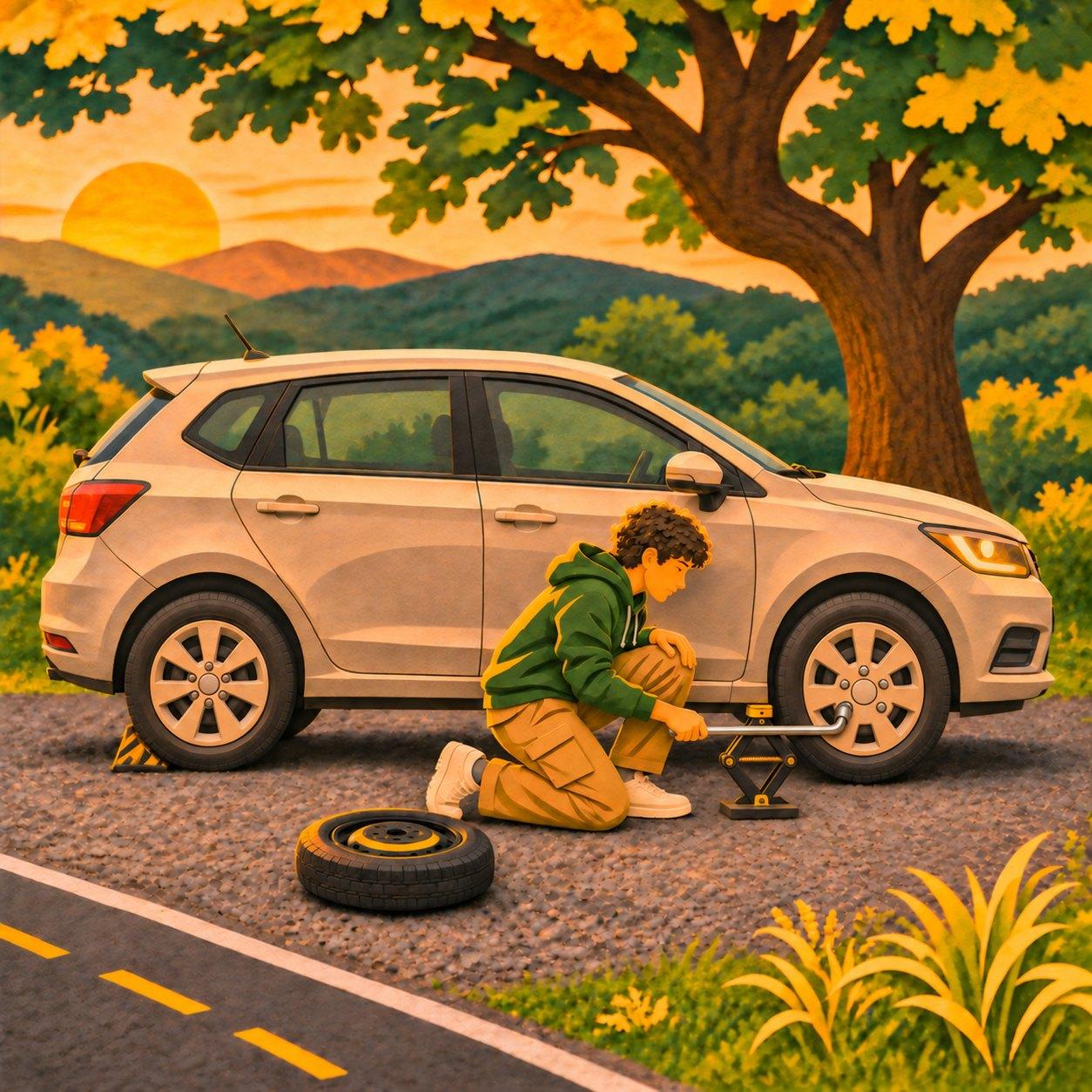
For your teen: what to do
- Slow down gently and steer to a safe place, as far from traffic as you can get.
- Turn on your hazard lights.
- Stay away from moving traffic. Do not stand in the road or try to fix anything next to passing cars.
- Call your parent or your roadside help number. Share your location from your phone.
- If the car is stuck in a traffic lane or you feel unsafe, call 911.
- If a stranger stops, you can say, "Thank you, help is already on the way."
What your teen is feeling
Stuck, and a little foolish, even though this is not their fault. They may wonder if they broke something or if you will blame them. If it is dark or the road is busy, they may be more scared than they sound.
What you are feeling
Worry about where they are and who is around them. Maybe some irritation about the timing and the repair bill. Both are normal, and neither needs to come through the phone.
The script
On the phone
Say
- "You did the right thing by calling. Are you in a safe spot?"
- "Stay put. Send me your location. I will stay on the phone if you want."
Try not to say
- "What did you hit?" or "I told you that car needed to be checked."
When you see them
Say
- "You handled that well. Cars break down. It happens to everyone."
Try not to say
- "This could not have come at a worse time."
That night or the next day
Say
- "Let's go over what worked today and what we would change."
- "Want me to show you what is in the trunk and who to call?"
The agreement to make ahead of time
"A breakdown is never your fault and never a reason to hide. You call, I come or I send help, and we figure out the car later."
If you would like more support
You do not have to work through parenting questions alone. Your pediatrician or your child's school can be good first conversations.
If you or your child are in crisis, call or text 988 in the United States, or call your local emergency number.