
Pulled Over by a Police Officer
Lights appear in the mirror, and your teen needs a simple, calm routine to follow.
Dr. Michael Zakalik, Psy.D., Licensed Clinical Psychologist
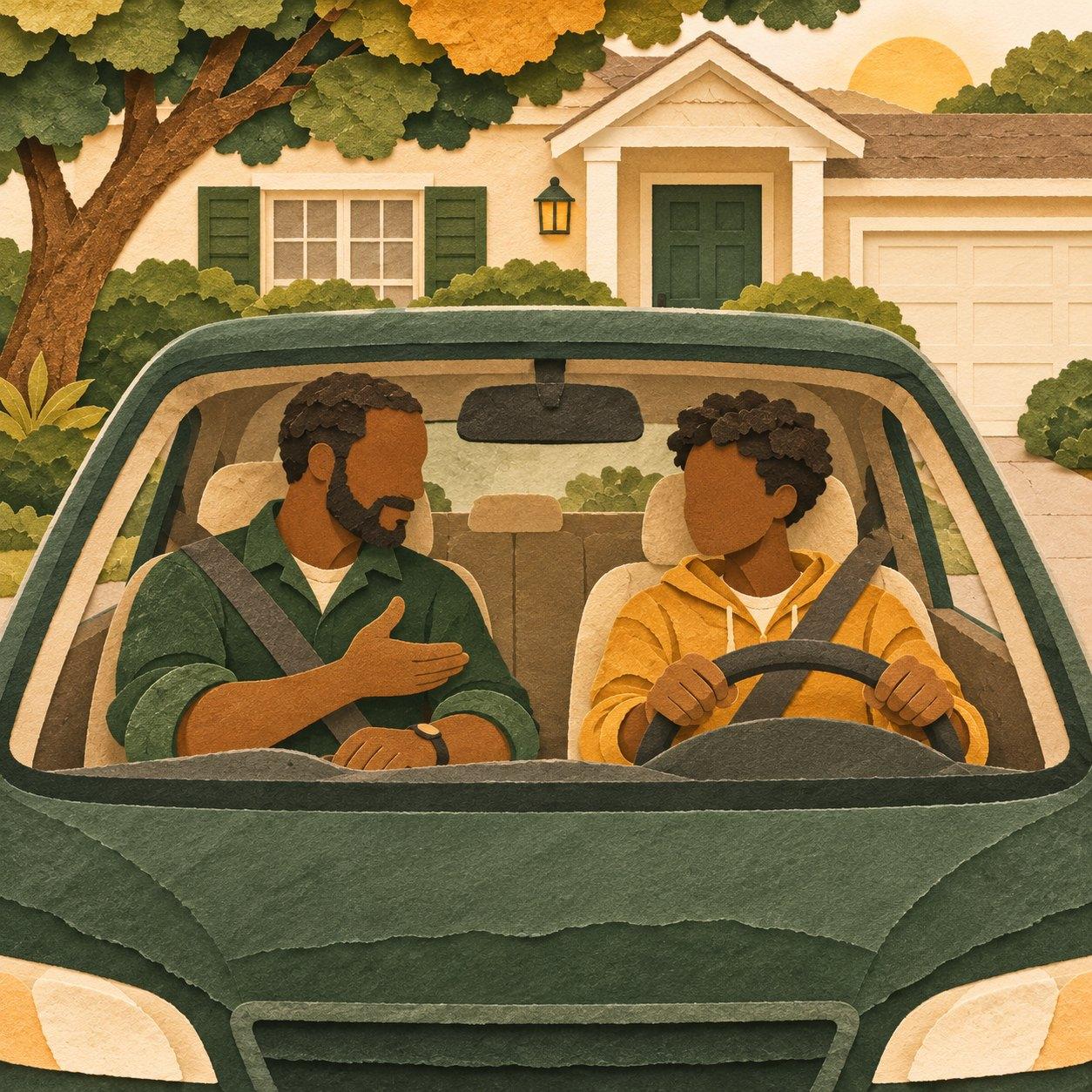
For your teen: what to do
- Signal and pull over safely as soon as you can. Turn off the engine.
- Stay in the car. Keep your hands where the officer can see them, such as on the steering wheel.
- Be polite. Answer calmly. Ask your passengers to stay quiet and still.
- Before you reach for anything, tell the officer: "My license is in my wallet. My registration is in the glove box. May I get them?"
- Hand over your license, registration, and insurance card when asked.
- Once the stop is over and you are parked somewhere safe, call or text your parent.
Laws vary by state. This is not legal advice.
What your teen is feeling
Their stomach drops. They may feel scared, guilty, or frozen, even if they did nothing wrong. With friends in the car, there is extra pressure to look calm or act tough.
What you are feeling
A jolt of fear, and for many parents that fear runs deep. You may also feel frustrated, or worried about a ticket and your insurance. Your teen needs your steadiness more than your questions right now.
The script
On the phone
Say
- "Thank you for telling me. Are you okay?"
- "Take a minute to settle before you drive again. There is no rush."
Try not to say
- "How fast were you going?" or "What did you say to the officer?"
When you see them
Say
- "That is a scary thing, and you stayed calm. I am proud of that."
Try not to say
- "You are lucky that is all that happened."
That night or the next day
Say
- "Tell me how it went, start to finish. What was the hardest part?"
- "If there is a ticket, we will make a plan together for handling it."
The agreement to make ahead of time
"If you are ever pulled over, tell me the same day. You will never be in more trouble for telling me than for the stop itself." Practice the routine together once in the driveway.
If you would like more support
You do not have to work through parenting questions alone. Your pediatrician or your child's school can be good first conversations.
If you or your child are in crisis, call or text 988 in the United States, or call your local emergency number.