
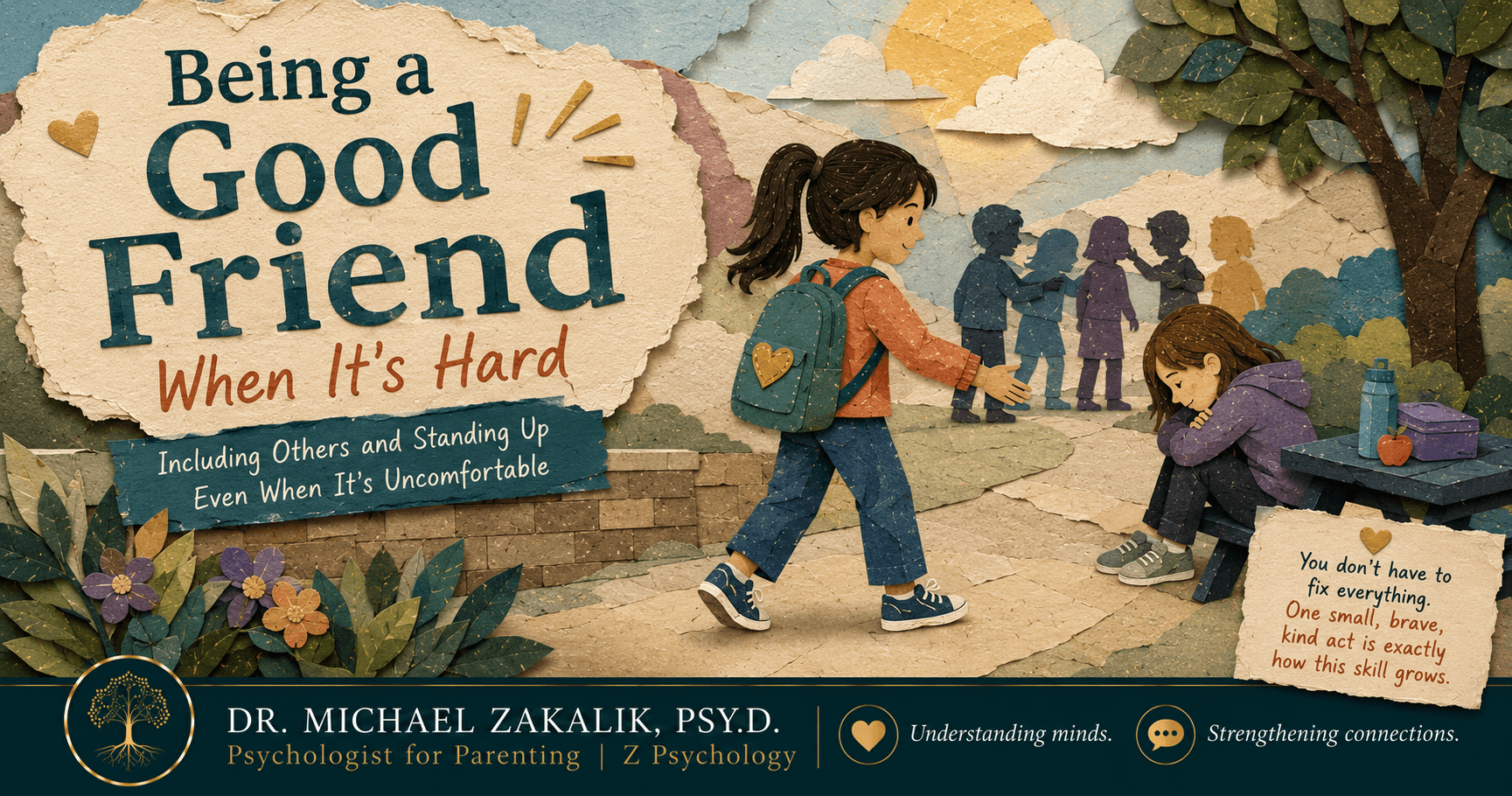
The move from being nice when it is convenient to being kind when it is brave.
(Disclaimer: The articles provided on this website are for informational and enhancing mental health awareness purposes only. They are not intended to be clinical interventions or provide medical advice. If you have any concerns about your well-being and/or well-being of others, please seek guidance from a qualified professional, such as a physician, psychologist, or counselor. If you are experiencing a clinical emergency please call 911 or 988 or go to the nearest emergency room. Here are some national and international helplines.)
By Dr. Michael Zakalik, Licensed Clinical Psychologist
Part of Dr. Z's Toolbox.
Being a Good Friend When It's Hard: A Kid's Guide
It is easy to be a good friend when everything is fun. The real test comes in the harder moments: when there is a new kid no one is talking to, when the group wants to leave someone out, when a friend is being teased and it would be so much easier to say nothing. Teaching kids to be a good friend when it costs them something is teaching them character, and it can be done with small, specific practice.
This is the advanced course in friendship, the move from being nice when it is convenient to being kind when it is brave. It builds directly on what makes a good friend. Most kids want to do the right thing here. They just need to know what the right thing looks like and to have rehearsed it before the moment arrives.
What does this actually look like?
Being a good friend when it is hard means doing the kind thing even when it is uncomfortable or unpopular: including someone who is left out, standing up for a friend, being honest gently, and staying loyal when it would be easier not to. These are the moments that separate a fair-weather friend from a real one.
Why it matters
These harder skills are where empathy turns into courage. A child who learns to read how others feel and to speak up when someone is mistreated becomes the kind of friend others can count on, and the kind of person who can live comfortably with themselves. This is also the heart of preventing bullying, because a single child willing to stand beside someone can change everything.
How to explain it to your child
The easiest time to be a good friend is when everything is fun and easy. But the most important time is when it is a little bit hard, like when someone is being left out, or when a friend needs you to stick up for them. Being brave enough to be kind in those moments is what makes someone a truly good friend. You do not have to fix everything. One small kind thing is enough.
"You do not have to fix everything. One small, brave, kind act is exactly how this skill grows."
What it looks like in real life
Your daughter mentions a kid at school who sits alone at lunch. This is a perfect, low-stakes opening, and a natural way to keep raising a thoughtful child. Rather than a lecture, wonder together: "I wonder how that feels. What is one small thing you could do?" Maybe it is a hello, or an invitation to sit together once. You are not asking her to adopt the child. You are coaching one small, brave, kind act, which is exactly how this skill grows.
Try it together: activities by age
Build the skill in small, everyday moments. By age:
- Ages 3 to 5. Everyone can play: gently encourage including others in play, and praise it warmly when it happens, since inclusion starts as a simple, practiced habit. Notice who is left out: during stories or at the park, point out when a character or child seems left out and wonder how they feel, because noticing comes before helping.
- Ages 6 to 8. One kind thing: talk through small, doable ways to include someone or help a friend, a hello, an invitation, sitting together, since keeping it small keeps it possible. What would you want?: when someone is left out, ask your child how they would feel in that spot, because the golden rule becomes real when they picture themselves there.
- Ages 9 to 12. Stand up, safely: talk through what to do when someone is being teased or excluded, including safe ways to help and when to get an adult, since bravery and safety can go together. The bystander choice: discuss how staying silent is itself a choice, and how one person speaking up gives others courage too, because older kids can grasp the quiet power they hold.
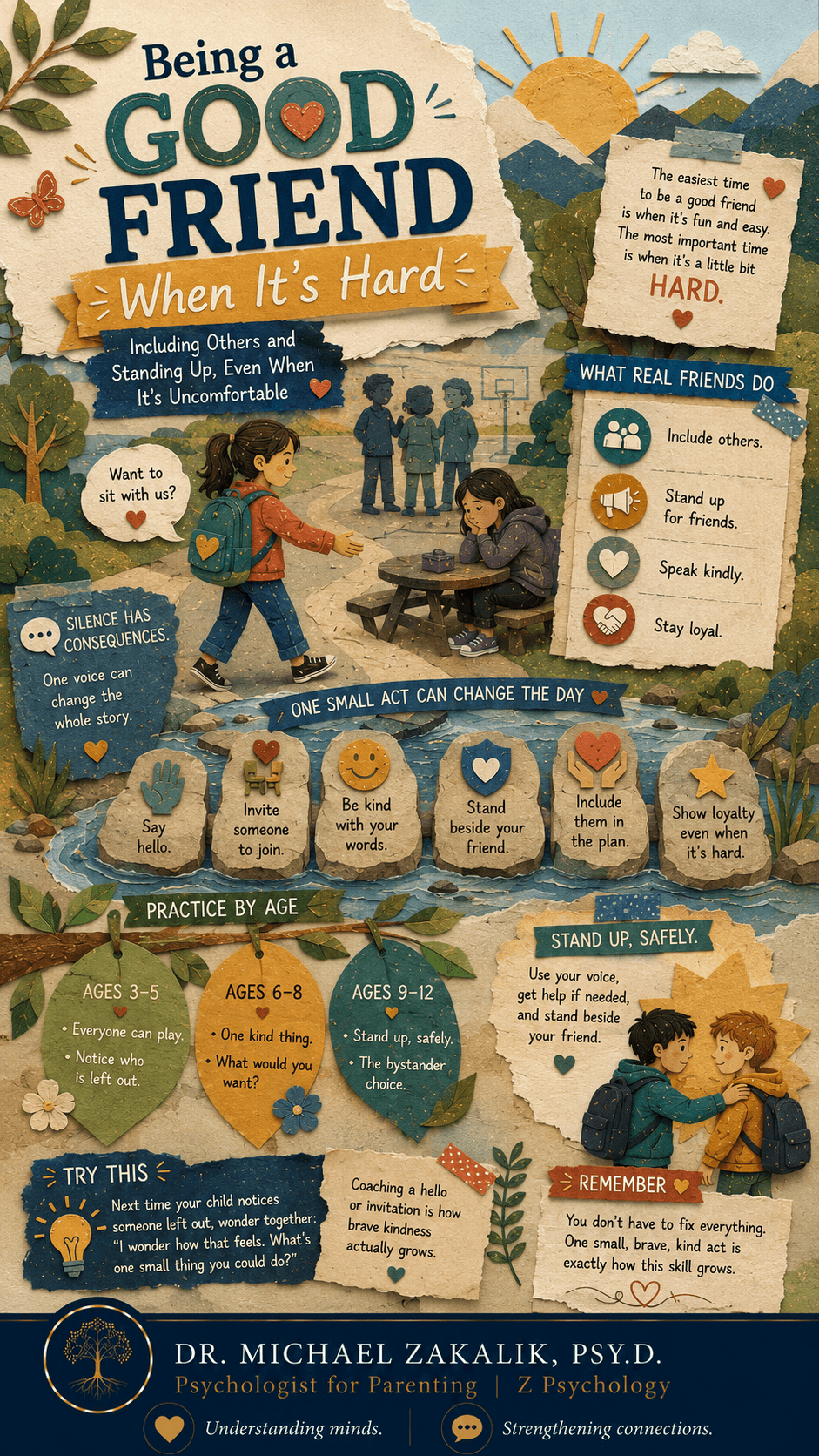
Try this: next time your child notices someone left out, skip the lecture and wonder together: "I wonder how that feels. What is one small thing you could do?" Coaching a single hello or invitation is how brave kindness actually grows.
Frequently asked questions
How do I teach my child to include others?
Start by helping them notice when someone is left out, then coach one small, doable act of inclusion, like saying hello or offering a seat. Praise it specifically when it happens. Inclusion grows from small practiced moments, not grand gestures.
What should I tell my child to do if they see bullying?
Teach safe options: showing kindness to the person being targeted, refusing to join in, telling a trusted adult, and inviting the person away from the situation. Make clear that getting an adult is brave, not tattling, when someone's safety or wellbeing is at stake.
My child worries that helping will make them a target. What do I say?
That worry is real and worth honoring. Emphasize safe forms of support, like a private kind word or quietly including someone, and telling an adult rather than confronting anyone directly. Being a good friend never has to mean putting themselves in danger.
Free download: One Small Brave Thing Family Discussion Guide
A safe, age-by-age guide to helping kids include others and stand up for friends without putting themselves in danger.
Download the guide (PDF)Enjoyed this? Explore more of Dr. Z's Toolbox